4 Lessons From Being a Chess Dad
My son and daughter both play chess. They are 9 and 7, with a 1400 and 900 ELO rating respectively. For those who don’t know: ELO defines your level. Anyone above 2000 is close to master level. The highest is around 2500. A 100-point difference is enough to predict who will likely win, which is why my kids don’t play each other.
They both started at age 5 with a mere 200 rating and worked their way up. The progress was never linear. They get excited when they win because their rating goes up, and sometimes cry after losing because it will go down. Their ratings have become part of their identities.
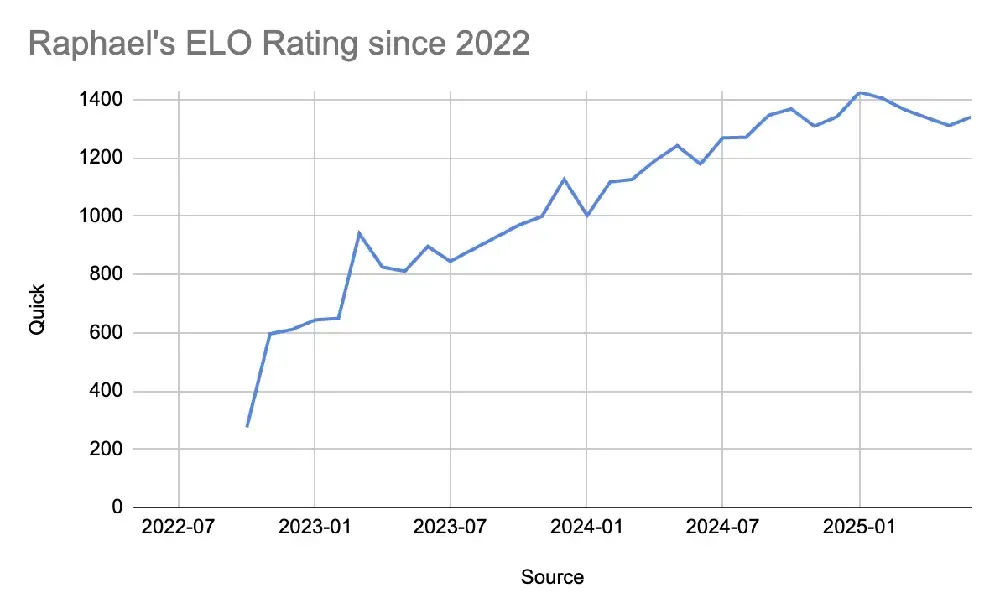
My wife and I have been doing this for three years: weekly tournaments, coaches, national competitions. She is competitive and I am not. She says they need a push. I say they need space. But we both care immensely about their wellbeing and future.
In the process, probably by accident, we’ve learned to recognize patterns that helped us find balance. Here is what I’ve learned so far.
🪞 Lesson 1: Compare yourself to who you were yesterday
We know many chess families. Their kids are also progressing and growing. Sometimes we compare their rate of growth to ours.
My son’s best friend from kindergarten also plays chess. When we met him, he was rated 400. Today he’s 1700 and came in 2nd place at Nationals. He is awesome! So we ask: How does he do it? What do his parents do differently?
When we compare ourselves to others, we:
- Feel discouraged
- Lose confidence
- Sometimes lose enthusiasm entirely
Those feelings are telling us something needs to change, but the answer isn’t always to quit or push harder.
There’s a third option: stop comparing yourself to others and instead compare yourself to who you were yesterday.
We are all playing a different game. Other people had different childhoods, grew up in different environments, and have different strengths. The only fair comparison is with your past self.
📚 Lesson 2: Sometimes you win, sometimes you learn
In chess, you only need to win 51% of the time to be a Grand Master (and you need to play a lot of games). That means even at the top of your game, you will still lose 49% of the time.
This is one of the biggest lessons: my kids are learning how to lose. Losing sucks. It makes us feel hopeless and glum. But these feelings are telling us something needs to change. We need to reframe our thinking: losing is an opportunity to learn.
There are so many things outside of our control. Since we can only control ourselves, we should focus on learnings.
📈 Lesson 3: Understand the compounding interest of staying in the game
A few months ago I wanted to give up chess. I had good arguments:
- Try other sports
- Do more fun stuff
- “Let them be kids!”
I had doubts: Are they doing it to please us? Are we damaging them?
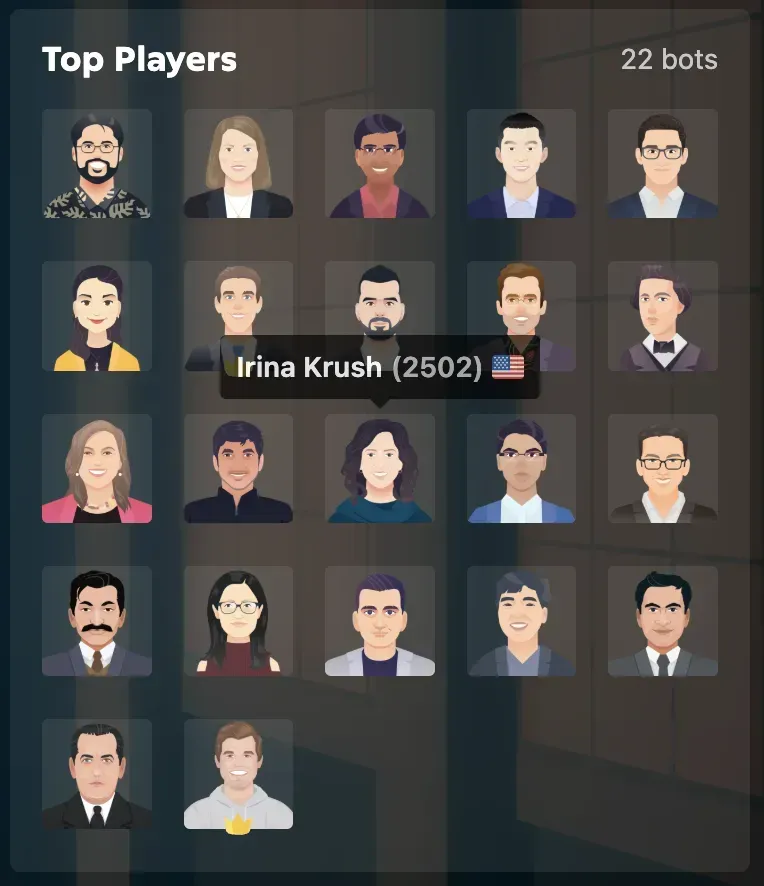
But on a flight to Orlando, I met Irina Krush, the 8-time women’s US champion, ranked #1 woman chess player in the USA with a 2500 rating. We talked for hours and became friends. One of the most revealing secrets of her success was that she started when she was 7. She became a Grand Master at 28 and never stopped playing and competing. She loves chess, but she also had to suffer many setbacks to get where she is.
Sometimes we change paths. There is nothing wrong with that, especially if you are not enjoying it. But the people at the highest levels are usually the ones who stayed the longest.
🎮 Lesson 4: Enjoy the game, winning is just a side effect
We keep asking our kids: Do you want to continue playing chess or should we take a break? Are you having fun? Every time, the answer is that they love chess.
I remember when they used to go into a game, we would say: Good luck! You will crush your opponent! You are the best! This was problematic:
- They can’t control luck
- Their opponent may be stronger
- Strictly speaking they are not the “best”
Even saying “I hope you win” is problematic because that’s all they’ll be thinking about.
When playing a game of chess, there is only one thing you need to be thinking about: the chess game. Everything else is a distraction. Thinking about winning, losing, luck, or hoping your opponent makes a mistake: all distractions.
Nowadays we tell them: Have fun and enjoy the game! Don’t worry about winning or losing. You will get ice cream regardless. 🍦